EOSC

470

0
0

0

Biological Oceanography

A quantitative examination of processes regulating the abundance, distribution and production of phytoplankton, zooplankton, microbes and fish. Controls of primary and secondary production, ecosystem dynamics and foodwebs.

EOSC

474

0
0

0

Marine Pollution

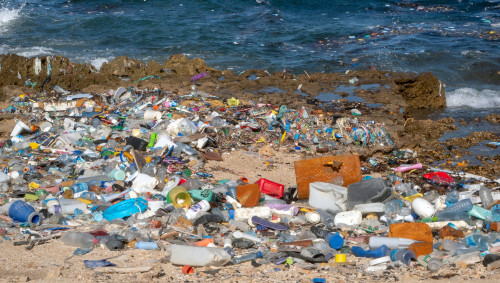
An interdisciplinary study of pollution, with examples drawn from coastal and oceanic environments, including areas of local interest. Intended for third and fourth year students with a background in the sciences.

EOSC

478

0
0

0

Introduction to Fisheries Science

An introduction to the ecology and management of freshwater and marine fisheries. Topics include: population dynamics, species interactions, communities, environmental influences, stock assessment, economics and sociology of fisheries. Laboratories will consist of numerical analyses and simulations.

ENVR

410

0
0

0

Energy, Environment, and Society

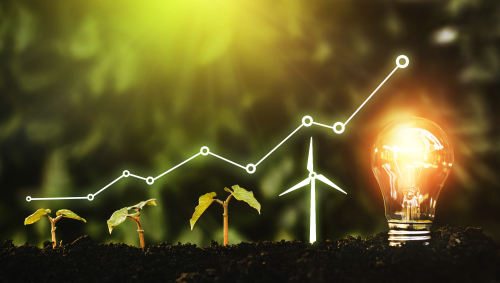
The role of energy in human societies throughout history and the environmental and social implications of energy use. Coverage of both the science and policy of energy use. Energy supply and demand, energy transitions, analytical tools, impacts, and alternatives.

ENVR

430

0
0

0

Ecological Dimensions of Sustainability

Current issues. Application to agricultural, energy, and resource systems in terrestrial and aquatic contexts. Analysis of complex problems; incorporation of science into novel interdisciplinary solutions.

ENVR

440

0
0

0

Analytical Methods in Sustainability Science

Sustainability analysis through a series of case studies. Example approaches include cost-benefit analysis, trade-offs analysis, and life-cycle analysis. Active learning in a computer lab using real-world data.

EOSC

250

0
0

0

Fields and Fluxes

Application of classical theory of scalar and vector fields to geophysical sciences. Conductive, convective and radiative energy flux, gravitation, electrostatics, and magnetostatics. Gauss' and Stokes' theorems.

EOSC

310

0
Non-Specialist

Hybrid Course

The Earth and the Solar System

The Earth as a planet: its composition, internal dynamics, and surface evolution. Rotation, magnetic field, plate tectonics, earthquakes, volcanoes. The ocean, atmosphere, and biosphere as components of a varying geo-environment. No background in science or mathematics is required. Not for credit for students in specializations administered by the Department of Earth, Ocean, and Atmospheric Sciences.  (https://www.eoas.ubc.ca/undergrad/degrees). Not for credit if you have already taken EOSC 110.

EOSC

314

0
Non-Specialist

Hybrid Course

The Ocean Environment

An introduction to the oceans and the processes that have shaped them, their composition and movement, waves, tides, beaches, interactions with the atmosphere and human exploitation of the non-living resources. No background in Science or Mathematics is required. Not for credit for students in specializations administered by the Department of Earth, Ocean, and Atmospheric Sciences. (https://www.eoas.ubc.ca/undergrad/degrees)

EOSC

325

0
Non-Specialist

0

Principles of Physical Hydrogeology

Theories of storage and movement of water within groundwater systems; Groundwater-surface water interaction; Role of groundwater systems in watershed management and regulating the environmental impacts of global change; Groundwater sustainability; Impacts of climate & land use changes on groundwater resources This course is not eligible for Credit/D/Fail grading.