
Why EOAS
World-class Science and Education
Our Department is both a top-20 ranked research institution in Earth and marine sciences, and a global leader in science education innovation.
Students find a rich, inspiring context for specializing in degree programs involving mathematics, computing, data science, physics, chemistry, geology and biology.
“Being able to apply the elegant concepts and methods of physics, chemistry and biology to study the Earth and positively impact peoples’ lives is what draws me to this field.”
An EOAS degree is a ticket to more varied and meaningful occupations than perhaps any other science discipline. Graduates will be leaders in tackling critical societal challenges including greening the economy, driving responsible actions on climate change, and providing respectful, science-based contributions in partnerships with all sectors and communities who engage with our lands, seas and the atmosphere.
If you enjoy both science and the outdoors, a degree in EOAS lets you combine your academic and personal interests to prepare for rewarding occupations.
Research
- COVID Impact on Field Work - Frances Jones. August 8, 2022
- Resilient rivers: Glacier controls of post-heatwave river flows in British Columbia. June 27, 2022
- Lessons from Glaciers: EOAS PhD candidate publishes opinion piece in the Globe and Mail. June 27, 2022
- How much water is stored in the subducting mantle? - Wasja Bloch. May 24, 2022
- EOAS faculty members participate in NASA's OSIRIS-REx mission. May 16, 2022
- Carbin Minerals founded by EOAS scientists wins $1 million from the Carbon Removal Xprize funded by the Musk Foundation. April 27, 2022
See more at EOAS news page; select category “Research”.
Teaching
- New EOAS Courses Respond to Climate Emergency. September 6, 2022
- Creating UBC's first student-curated museum. September 6, 2022
- How do I get started? Creating safer learning environments for Indigenous students in STEM at UBC. July 26, 2022
- First field school at the new UBC – Teck Geological Field Station. June 7, 2022
- Dr. Kirsten Hodge and Dr. Laura Lukes at the Canadian Association of Science Centres' Action to Impact conference. May 27, 2022
See more at EOAS news page; select category “Teaching”.
Faculty, Staff and Students: Diversity & Success
 We have over 60 award-winning research and education- focused faculty members who come from diverse academic and cultural backgrounds.
Their research spans the Earth, ocean, atmospheric, planetary, and environmental disciplines. They are committed to helping advance educational practices based on evidence-oriented pedagogies.
This combination offers students uniquely inspiring and broadly applicable learning experiences which lead to science degrees to meet their interests and expectations for success.
- Meet Marghaleray Amini - Geochemist
- Meet Rhiana Elizabeth Henry - Mineralogist
- Meet Dr. Alice Chang - PCIGR Project Manager
- Meet Lualawi Mareshet Admasu - Atmospheric Scientist
- Meet Dr. Scott Blumenthal - Paleoecologist
- Meet Alexis Bahl - Oceanographer
- Meet Farhad Bouzari - Economic Geologist
- Meet Catriona Breasley - Mineralogist
- Meet Dr. Dominique Weis - Geochemist
- Meet Becca Beutel - Physical Oceanographer
- Meet Daniel Adria - Civil Engineer
See more at EOAS news page; select category “People”.
Earth - a rich context for learning the basic sciences
 Studying the basic disciplines within the context of “how our complex planet works” provides a comprehensive and motivating setting for the rigorous yet agile thinking expected for current and future professions.
Innovative pedagogy; interdisciplinary contexts; balancing solo and collaborative work - all these help students succeed in their chosen field of science.
Communities globally urgently need professionals with rigorous, multi-disciplinary capabilities. Graduates from our degree programs will be the difference-makers of tomorrow who will address the world’s needs. These include finding, providing and sustaining materials that societies need; managing the extraordinary variety of Earth’s environments - both natural and human influenced; and managing the impacts of our activities on the planet’s land, seas and atmosphere.
Vibrant Student Community
Our vibrant student community creates an inspiring environment for students to realize their potential. They will meet the people who will help them succeed at UBC and - more importantly - beyond, in subsequent occupations. Our various undergraduate clubs and events stimulate engagement with peers. Active classroom, laboratory, field and community-based learning experiences result in efficient, effective preparation for professional life.
- Learn more on our Student Life and Events page.
- Also explore our page with examples of Student accomplishments.
- See our alumni page for stories from past EOAS students.

Degrees
Degree Specializations at EOAS
UBC’s Department of Earth, Ocean and Atmospheric Sciences offers the most diverse choice of BSc and BAsc degree specializations of any science department at UBC.
A student-inspired comment:
What I find fascinating is measuring and quantifying things we cannot see directly and then analyzing data to inform important decisions affecting communities or resources or our planet.
Pursue a degree in one of these seven different specializations, or choose to combine two disciplines for a combined majors or honors degree.


More student-inspired comments:
A love of nature, exploration and science is perfectly matched to geoscience studies, enabling a path that combines my recreational and academic interests for an exciting future career.
I became fascinated in what the Earth was like when ancient life forms were around and what kind of processes formed the spectacular landscapes we see today.
Will you thrive in EOAS?
EOAS students are science-oriented, multi-disciplinary, work well solo or in teams, and enjoy a balance of classroom, laboratory, home, community and field learning. They have a deep commitment to helping address today’s urgent social, environmental and climate challenges.
- Are you good at math, physics and data science? You might choose:
>Atmospheric Sciences, >Geophysics, >Oceanography or >Geological engineering. - Do you love the great outdoors? You might choose:
>Geological Sciences, >Environmental Sciences, >Oceanography or >Geological Engineering. - Are you fascinated by Earth’s materials, landscapes & dynamics? You might choose:
>Geological Sciences or >Geological Engineering. - Are you interested in biology? You might choose:
>Environmental Sciences or >Oceanography.
This table helps match your interests with one or more of the EOAS degree specializations.

Another student-inspired comment:
I hope to make the world a better place and keep our planet healthy for the coming generations.
Contacts and Advisors
Current or prospective students will find contact information for advice about degree program specializations in our “Advice & Support” section, as well as additional information about how to find support from Department, Faculty and UBC people and organizations.
Apply to pursue an EOAS degree
Apply to one of the specializations offered in EOAS by using guidelines provided by the Faculty of Science. See also …
- UBC’s first year requirements must be completed before applying to Science Specializations: see the Second Year Science Specialization Application Requirements for details.
- Are you completing one or more required first-year courses in the summer? You may apply to the department directly after completion of the course(s). However, UBC Science students with second-year standing or above must be in a specialization (e.g., a Major) before registering in courses. Therefore, select a different specialization that you qualify for in June, then apply to the department after completing the requirements at the end of summer session (August).
- Are you currently in another faculty of UBC? Please first consult the Faculty of Science Science Information Centre to determine the possibility of transferring to Science.
- You may also apply to the department if:
- you are transferring to UBC Science in year 2 or 3 but not eligible to take part in the online application process, or
- you are currently a UBC Science student in year 2 or 3 with a different specialization but you are interested in switching over to one of our specializations.
- Apply by contacting the Undergraduate Program Coordinator via email at ugradsec@eoas.ubc.ca and include your student number in your email.
Career Paths
Versatile - Rewarding - Inspiring - Impactful
Improving lives and communities through occupations and careers in Earth, ocean, atmospheric, climate, planetary or environmental sciences.
What can I do with my Science degree?
- UBC’s Science Careers page, introduces positive impacts of science, how to establish a competitive edge, experiences beyond the laboratory or classroom and more.
- Discover your Future in Science on the Faculty of Science’s introductory page.
- Why Earth, Ocean, Atmospheric and environmental sciences? Our department offers inspiring degrees covering the entire range of science interests, from math, physics and computing to biology, chemistry, geology and environmental disciplines.
Versatile career options
You gain so much more from EOAS degree specializations ...
- Multidisciplinary skills and knowledge; math, computing, physics, environment & climate science, geology, resource stewardship, oceanography, engineering… .
- Rigorous foundations acquired in context; basic science becomes meaningful when learned within important and inspiring contexts.
- Versatile, current and future-ready skills that employers are looking for; EOAS programs provide the optimal balance of fundamental knowledge and career-ready skills.
- Capabilities for addressing society’s major challenges: Your EOAS degree enables you to contribute to rigorous, respectful and responsible decision-making regarding climate change, resource stewardship, environmental & natural hazards management, and others.
- Professional registration: EOAS degrees enable you to prepare for registration as a professional engineer, geoscientist or biologist in British Columbia.
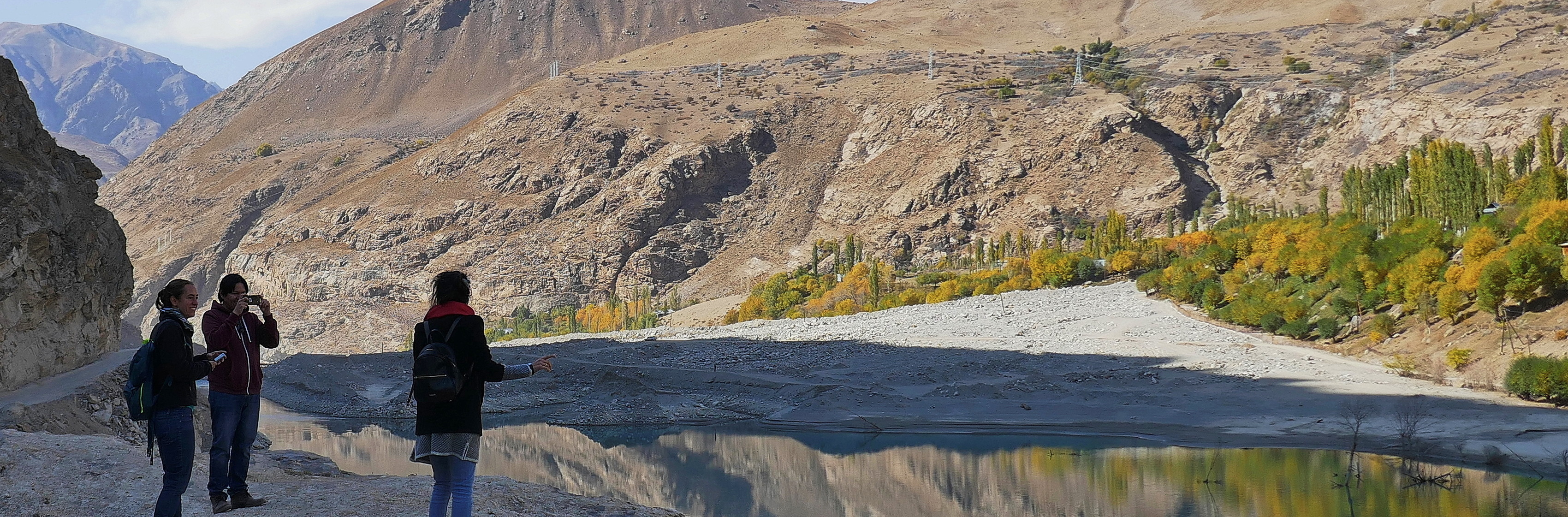
Showcasing professionals and employers
Diverse professionals with Earth, ocean, atmospheric or environmental science degree backgrounds are showcased on the following pages.
- EOAS alumni spotlights; meet these and others …
- geophysics graduate & consulting field geophysicist (UBC profile)
- atmospheric science (ATSC) graduate & winning yacht race skipper
- ATSC graduate & wind energy data analyst
- environmental science graduate & associate lawyer (UBC profile)
- geologist & museum curator
- Geological engineer, sustainability advocate & politician
- Meet creative EOAS staff, faculty & students: See more at EOAS news page; select category “People”.
- Geophysicist, instrumentation engineer & educator: Francis Jones, MSc.
- ...
Discover career prospects, current demand, and emerging trends at the regularly updated Geoscience Workforce section of the American Geosciences Institute (AGI). Especially inspiring is AGI’s page “Careers that Change the World”.
The July 2022 issue of the American Geophysical Union (AGU) science news magazine “EOS” includes 19 career pathway mini-essays. Open this drop-down section for pointers:
- Bringing Satellite Data Down to Earth: Showing how eyes in the sky can help people on the ground.
- Forwarding Knowledge on Climate and Gender: A climate scientist builds a network for women and nonbinary people in her field.
- A Voice for Indigenous Agriculture: A farmer draws on Traditional Knowledge to restore the Native American food system.
- Changing Conservation Narratives: From the USA to Peru and beyond, she is working on environmental and social justice projects.
- The Virtual Reality of Climate Change: bringing science to the public using technologies like virtual reality to improve understanding of climate change.
- Never Settle for Things as They Are: An award-winning astrophysicist is using her visibility to call attention to inequalities in the Brazilian science community.
- Normalizing STEM in America’s Heartland: Community science builds bridges while generating valuable environmental data.
- Slowing the “Escalation to Extinction” of birds: From Bolivia to Peru, he researches how a warming world affects tropical birds.
- A “Really Long, Convoluted Path” to Health: Lo uses her background in atmospheric sciences to forecast pollen concentrations.
- Disrupting the Status Quo: Advocating for the importance of Traditional Knowledge in Finland and beyond.
- Planets are Interdisciplinary: Inspired by the Arecibo Observatory, studying planets and inspiring youth (including audio interview).
- Greasing Telescope Gears During a 7-Month-Long Night while overwintering at the South Pole Telescope facility.
- A Champion for DEI in the Geosciences: Studying tectonic plates and sand and working to make the geosciences more equitable.
- Studying Oceans from Above: Oceanography with a combination of laboratory work and satellite imagery.
- Proud to Study Paleoclimate in Colombia: Bringing a fresh, Latina perspective to paleoclimatology.
- Preserving Earth’s Biodiversity and Integrity: From Antarctica to the Arctic, a climate scientist visits Earth’s frozen areas to study the effects of climate change.
- A Just Transition to Clean Energy: Making sure people whose incomes rely on fossil fuels aren’t left behind as alternative energy sources become more established.
- Going with the Flow: A career in fluid mechanics is both intellectually stimulating and well suited to solving environmental problems.
- Community College Professor Goes to Space: An Arizona geoscience educator finds she has the SpaceX factor to become an astronaut.
Your prospects with EOAS qualifications from UBC
The rapidly changing future of energy, mineral and water resources, environmental stewardship, climate change and hazard assessment present challenges to society. Our graduates are those who will address these pressing issues.
Click sections below for more about the work of professionals with EOAS degrees.
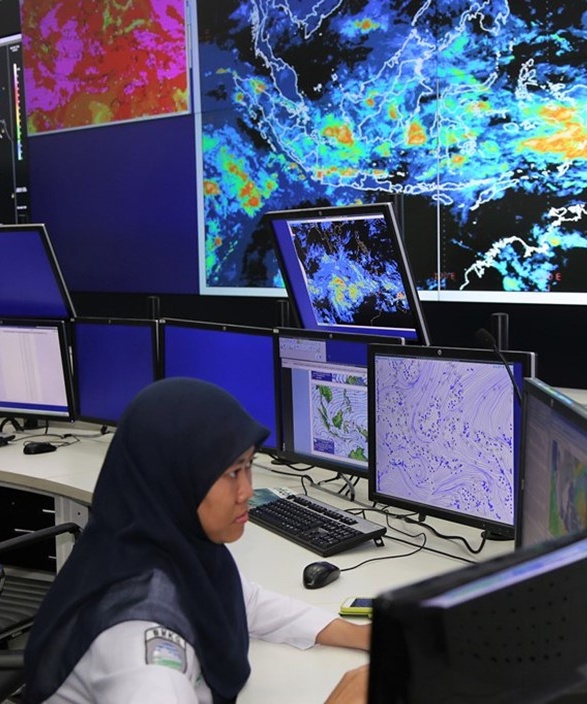 Work in: air quality, meteorology, environmental consulting, weather forecasting, as pilots, air-traffic controllers, fire-weather forecasters, weather-software and app developers, and TV meteorologists.
Provide expertise for the public, corporate, agriculture, aviation, transportation, insurance, commerce, air quality, and other sectors.
Work may involve: deploying field instruments, making observations, retrieving large public/commercial datasets, analysis, data science, or programming
Skills acquired: include math, physics, data science, meteorology, communication, teamwork, computer programming, project management, and more.
More details:
- UBC programs; Atmospheric Sciences.
- Atmospheric Sciences outline at the Faculty of Science.
- The EOAS Atmospheric Sciences degree details page.
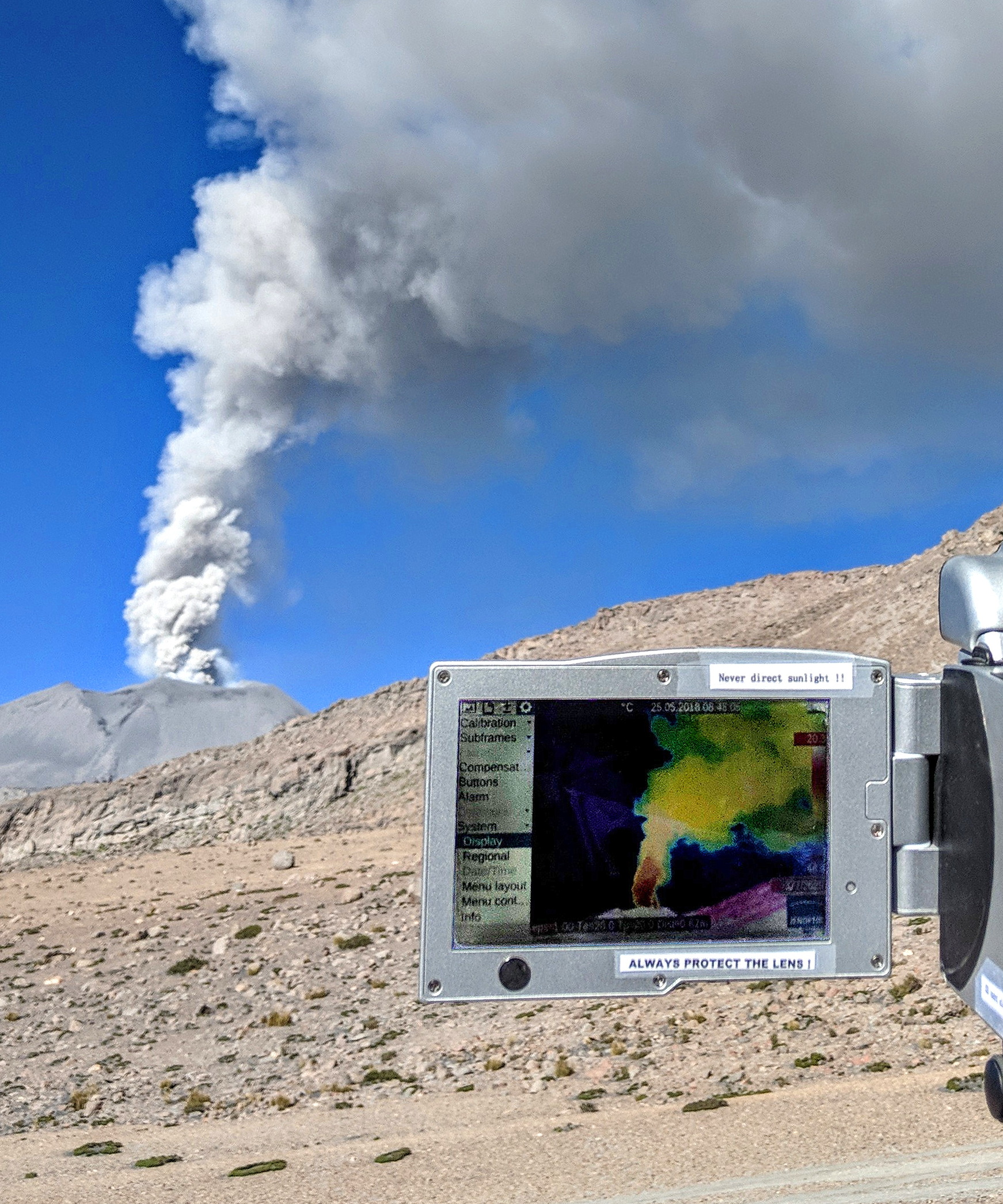 Work as consultants or principles in the energy, resources and water sectors, to assess hazards, or conduct fundamental research to better understand our planet from local to global scales.
Provide expertise in math/physics/computing to ensure effective decisions regarding the environment, energy, resources, construction, natural hazards and many other issues critical to an efficient, sustainable, equitable society.
Work may involve: Use surface, airborne & satellite methods to gather data for visualization, modeling and analysis of Earth’s surface and subsurface. Communicating complex results, phenomena & data sets to decision makers is also important.
Skills acquired: rigorous understanding of how, when and why to apply methods involving mathematics, physics, computing, modeling & data science. Geophysicists are often the first to conceive and develop these state-of-the-art computing and instrumentation technologies.
More details …
- "What can I do with a BSc in Geophysics?" - a Faculty of Science blog.
- UBC programs; Geophysics.
- Geophysics outline at the Faculty of Science.
- The EOAS Geophysics degree details page.
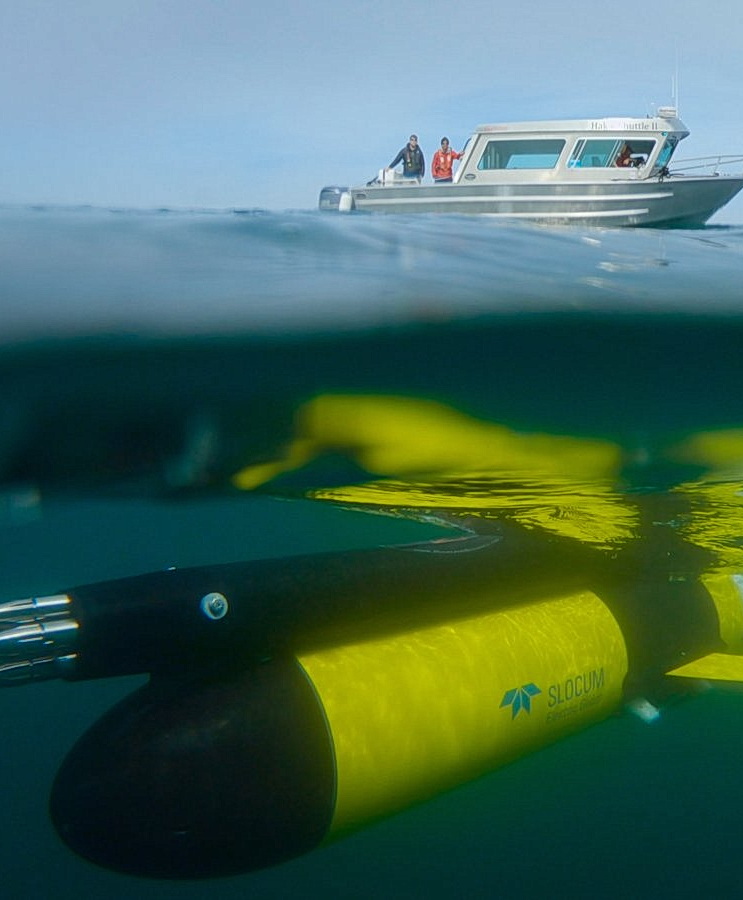 Work in: research labs and industries ranging from fisheries and resources to coastal ecosystem management and tourism.
Provide expertise for local, industrial, government and environmental organizations affecting policy, community safety and sustainability, food and climate justice, commerce, and education.
Work may involve: computing, data processing and analysis, lab work, ships, boats, coastal field settings, local, regional or global communities and organizations, public or academic education, and more.
Skills acquired: You will be the most interdisciplinary of Earth science professionals since the Oceans are such a complex system of physical, chemical and biological processes - all interacting at depth and at interfaces including air/water, ocean/land, sea/rivers.
More details …
- UBC programs; Oceanography.
- Oceanography outline at the Faculty of Science.
- The EOAS Oceanography degree details page.
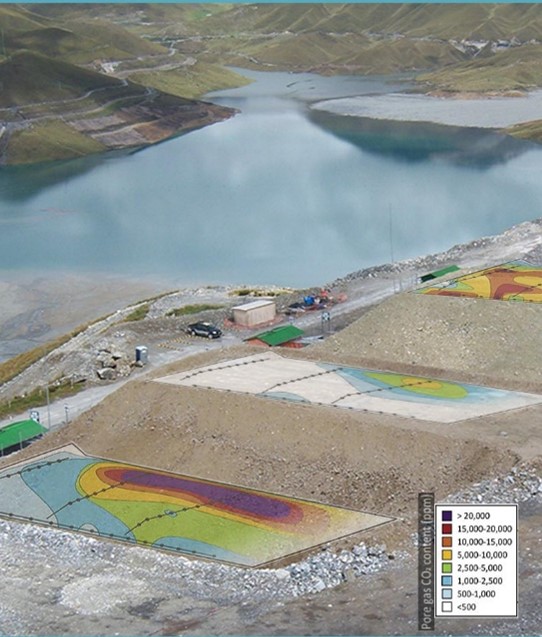 As a Geological Engineering graduate you will be in high demand and have a wide selection of career opportunities to choose from. Senior Geological Engineers become international experts, with many serving as CEO's or owning consulting companies.
Work in: You will contribute in the natural resources, environmental protection, civil infrastructure, natural hazards, water management, energy or related sectors.
Provide expertise for infrastructure construction and maintenance, the resource, water and energy sectors, hazards mitigation and more.
Work may involve: field and office work, consulting, project design, computing and modelling, community and engagement with commercial and public sectors.
Skills acquired: the math, physics & geology for project design or evaluation, project management, working with teams and communicating as an expert consultant.
More details …
- UBC programs; Geological Engineering.
- Geological Engineering outline. See especially the “Escape the Office” page.
- The EOAS Geological Engineering degree details page.
 Work in: mineral, energy, and water resource industries; With industry or research experience, geologists may also work as consultants or in government or NGO settings. Others dedicate their careers to research in academia or geoscience education
Provide expertise in industry, consulting, government academic or international & NGO settings.
Work usually involves: a stimulating combination of field, laboratory, computing, office, consulting or team work and communication with clients, public or partners.
Skills acquired: A geologist’s unique combination of skills and knowledge encompasses the Earth’s composition, history, and processes, including:
- chemical and physical properties of minerals, rocks, and fluids
- history & evolution of life
- formation and distribution of critical mineral deposits
- Hazards including earthquakes, volcanoes and unstable ground
- the quality, distribution and management of groundwater
More details:
- UBC programs; Geological Sciences.
- Geological Sciences outline at the Faculty of Science.
- The EOAS Geological Sciences degree details page.
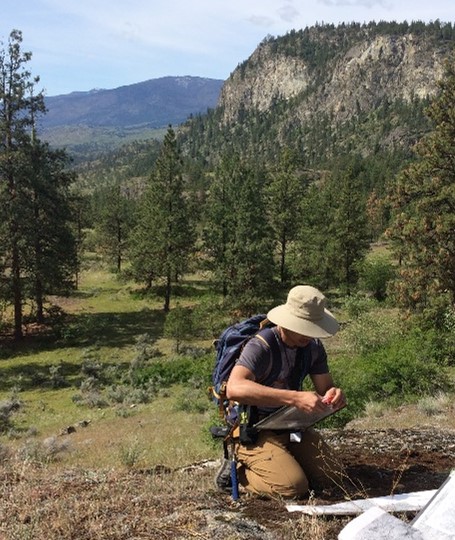 Work in: research, government, consulting, industry, law, medicine, occupational health, education or advocacy.
Provide expertise for local / regional / global policy making, international development, journalism, food systems management, sustainable business, forestry and energy practice, resource stewardship, environmental consulting or transportation and urban planning.
Work may involve community engagement, field measurements, lab work, computing, writing, teaching, consulting, food and climate justice - virtually any setting.
Skills acquired: interdisciplinary science, a systems understanding of environmental challenges, critical thinking and research skills, teamwork, project management, communication.
More details:
- UBC programs; Environmental Sciences.
- Environmental Sciences outline at the Faculty of Science.
- The EOAS Environmental Sciences degree details page.
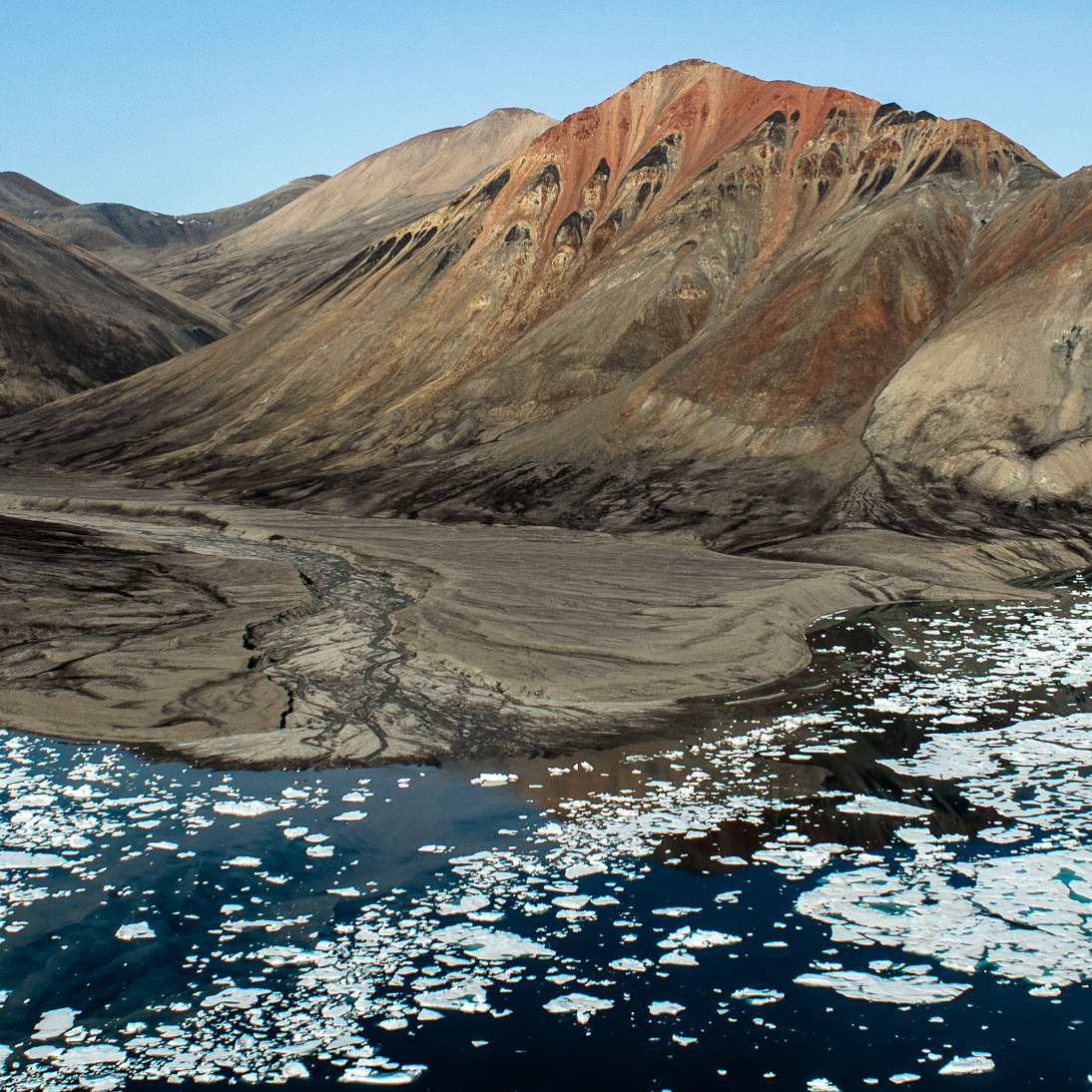 Earth and Ocean Sciences is a flexible specialization encompassing the broad spectrum of disciplines within EOAS.
You can choose to focus on geology, geophysics, oceanography or atmospheric sciences or choose courses for a broader overview of Earth Sciences.
Your qualifications will prepare you for further studies or occupations in education, pre-med, law, journalism, or other disciplines.
More details:
- UBC programs; Earth and Ocean Sciences.
- Earth and Ocean Sciences outline at the Faculty of Science.
- The EOAS Earth and Ocean Sciences degree details page.
Specific options at UBC
You can pursue a BSc Majors or Honors degree in one of seven different specializations, or choose a Combined Majors or Combined Honors degree by combining two of these or one plus another subject at UBC. See the EOAS Degrees page for details.
Seek out advice and discover opportunities for scholarships, work experiences, and EOAS student accomplishments and activities including clubs, communities and social or job-related networking events.
Courses & Registration
Prospective students
The Department of Earth, Ocean & Atmospheric Sciences offers courses across a wide range of topics in Earth, ocean, atmospheric, climate, environmental and planetary sciences. Use links on this page to find courses that will inspire you and contribute to your development as a professional or well-informed citizen.
Course Planning Guide
STEP 1. Visit the UBC Course Calendar to find a list of courses required within each degree program option:
- Earth and Ocean Sciences
- Geological Sciences
- Geophysics
- Oceanography
- Atmospheric Sciences
- Environmental Sciences
STEP 2. Visit the UBC Course pages to read course descriptions and check course timetables:
- EOSC: Descriptions + Timetables
- ATSC: Descriptions + Timetables
- ENVR: Descriptions + Timetables
STEP 3. Check out UBC’s Degree Navigator.
STEP 4. Register for your courses.
HAVE QUESTIONS? Contact one of our academic advisors for support.
Courses by Topic
NOTES:
1) These tables are representative only. Actual content may vary depending on the instructors’ priorities.
2) Please check pre-requisites in the UBC Course Calendar and contact advisors if there are further questions.
Courses with some content related to climate or environmental sciences
|
Applied Meteorology |
|
|
Meteorology of Storms |
|
|
Earth and Atmospheric Science Introductory Computing Laboratory |
|
|
Atmospheric Radiation and Remote Sensing |
|
|
Methods in Atmospheric Science |
|
|
Renewable Energy Meteorology |
|
|
Dynamic Meteorology |
|
|
Cloud Physics and Chemistry |
|
|
Operational Meteorology |
|
|
Numerical Techniques for Ocean, Atmosphere and Earth Scientists |
|
|
Introduction to Environmental Science |
|
|
Introduction to Research in Environmental Science |
|
|
Research Project in Environmental Science |
|
|
Energy, Environment, and Society |
|
|
Ecohydrology of Watersheds and Water Systems |
|
|
Ecological Dimensions of Sustainability |
|
|
Analytical Methods in Sustainability Science |
|
|
Socio-Ecological Systems Research |
|
|
Student Directed Seminars in Environmental Sciences |
|
|
The Solid Earth: A Dynamic Planet |
|
|
Laboratory Exploration of Planet Earth |
|
|
The Fluid Earth: Atmosphere and Ocean |
|
|
The Catastrophic Earth: Natural Disasters |
|
|
Mesozoic Earth: Time of the Dinosaurs |
|
|
Earth Science for Engineers |
|
|
Topics in the Earth and Planetary Sciences |
|
|
Site Investigation |
|
|
Marine Biodiversity |
|
|
The Earth and the Solar System |
|
|
The Earth and its Resources |
|
|
The Ocean Environment |
|
|
The Ocean Ecosystem |
|
| EOSC 325 |
Principles of Physical Hydrogeology |
|
Earth and Life Through Time |
|
|
Elemental and Isotopic Geochemistry |
|
|
Global Climate Change |
|
|
Introductory Oceanography: Climate and Ecosystems |
|
|
Geoscientific Data Analysis and Empirical Modelling |
|
|
Climate Measurement and Analysis |
|
|
Engineering Design Project |
|
|
Physics of the Earth and Other Planets |
|
|
Methods in Oceanography |
|
|
Marine Pollution |
Courses in which the human context is incorporated into some topics. Courses NOT mentioned tend to be more about building scientific, technical or specialized skills & knowledge.
|
Applied Meteorology |
|
|
Renewable Energy Meteorology |
|
|
Dynamic Meteorology |
|
|
Operational Meteorology |
|
|
Introduction to Environmental Science |
|
|
Introduction to Research in Environmental Science |
|
|
Research Project in Environmental Science |
|
|
Energy, Environment, and Society |
|
|
Ecohydrology of Watersheds and Water Systems |
|
|
Ecological Dimensions of Sustainability |
|
|
Analytical Methods in Sustainability Science |
|
|
Socio-Ecological Systems Research |
|
|
Laboratory Exploration of Planet Earth |
|
|
The Catastrophic Earth: Natural Disasters |
|
|
Earth's Treasures: Gold and Gems |
|
|
Earth Science for Engineers |
|
|
Topics in the Earth and Planetary Sciences |
|
|
Site Investigation |
|
|
Marine Biodiversity |
|
|
The Earth and the Solar System |
|
|
The Earth and its Resources |
|
| EOSC 325 |
Principles of Physical Hydrogeology |
|
Groundwater Hydrology |
|
|
Principles of Geomorphology |
|
|
Introduction to Mineral Deposits |
|
|
Global Climate Change |
|
|
Fossil Fuels |
|
|
Geotechnical Engineering Practice |
|
|
Geological Engineering Soils and Weak Rocks |
|
|
Climate Measurement and Analysis |
|
|
Engineering Design Project |
|
|
Marine Pollution |
|
|
Introduction to Fisheries Science |
Courses in which geoscience concepts and skills will be used and/or learned.
|
Introduction to Environmental Science |
|
|
Ecohydrology of Watersheds and Water Systems |
|
|
The Solid Earth: A Dynamic Planet |
|
|
Laboratory Exploration of Planet Earth |
|
|
The Catastrophic Earth: Natural Disasters |
|
|
Mesozoic Earth: Time of the Dinosaurs |
|
|
Earth's Treasures: Gold and Gems |
|
|
Earth Science for Engineers |
|
|
Computer Methods in Earth, Ocean and Atmospheric Sciences |
|
|
Topics in the Earth and Planetary Sciences |
|
|
Computational Methods in Geological Engineering |
|
|
Introductory Mineralogy |
|
|
Introductory Petrology |
|
|
Geological Time and Stratigraphy |
|
|
Field Techniques |
|
|
Site Investigation |
|
|
The Earth and the Solar System |
|
|
The Earth and its Resources |
|
|
Sedimentology |
|
|
Igneous Petrology |
|
|
Metamorphic Petrology |
|
|
Structural Geology I |
|
| EOSC 325 |
Principles of Physical Hydrogeology |
|
Earth and Life Through Time |
|
|
Field Geology |
|
|
Groundwater Hydrology |
|
|
Principles of Geomorphology |
|
|
Introduction to Mineral Deposits |
|
|
Tectonic Evolution of North America |
|
|
Elemental and Isotopic Geochemistry |
|
|
Environmental, Geotechnical, and Exploration Geophysics I |
|
|
Seismology |
|
|
Analysis of Time Series and Inverse Theory for Earth Scientists |
|
|
Geoscientific Data Analysis and Empirical Modelling |
|
|
Volcanology |
|
|
Advanced Sedimentology |
|
|
Structural Geology II |
|
|
Advanced Mineral Deposits |
|
|
Palaeontology |
|
|
Fundamentals of Geomicrobiology |
|
|
Field Techniques in Groundwater Hydrology |
|
|
Groundwater Contamination |
|
|
Aqueous Geochemistry |
|
|
Groundwater Remediation |
|
|
Fossil Fuels |
|
|
Geotechnical Engineering Practice |
|
|
Geological Engineering Soils and Weak Rocks |
|
|
Engineering Design Project |
|
|
Potential Fields in Earth and Planetary Sciences |
|
|
Physics of the Earth and Other Planets |
|
|
Applied Geophysics |
Courses that may involve learning about planets other than Earth.
|
Atmospheric Radiation and Remote Sensing |
|
|
The Solid Earth: A Dynamic Planet |
|
|
Computer Methods in Earth, Ocean and Atmospheric Sciences |
|
|
Topics in the Earth and Planetary Sciences |
|
|
The Earth and the Solar System |
|
|
Tectonic Evolution of North America |
|
|
Geophysical Continuum Dynamics |
|
|
Geoscientific Data Analysis and Empirical Modelling |
|
|
Potential Fields in Earth and Planetary Sciences |
|
|
Physics of the Earth and Other Planets |
Courses in which concepts involving the ocean and/or atmosphere will be used and/or learned.
|
Applied Meteorology |
|
|
Meteorology of Storms |
|
|
Earth and Atmospheric Science Introductory Computing Laboratory |
|
|
Atmospheric Radiation and Remote Sensing |
|
|
Methods in Atmospheric Science |
|
|
Renewable Energy Meteorology |
|
|
Dynamic Meteorology |
|
|
Cloud Physics and Chemistry |
|
|
Operational Meteorology |
|
|
Numerical Techniques for Ocean, Atmosphere and Earth Scientists |
|
|
Introduction to Environmental Science |
|
|
Introduction to Research in Environmental Science |
|
|
Research Project in Environmental Science |
|
|
Energy, Environment, and Society |
|
|
Laboratory Exploration of Planet Earth |
|
|
The Fluid Earth: Atmosphere and Ocean |
|
|
The Catastrophic Earth: Natural Disasters |
|
|
Mesozoic Earth: Time of the Dinosaurs |
|
|
Computer Methods in Earth, Ocean and Atmospheric Sciences |
|
|
Topics in the Earth and Planetary Sciences |
|
|
Marine Biodiversity |
|
|
The Earth and the Solar System |
|
|
The Ocean Environment |
|
|
The Ocean Ecosystem |
|
|
Earth and Life Through Time |
|
|
Elemental and Isotopic Geochemistry |
|
|
Global Climate Change |
|
|
Geophysical Continuum Dynamics |
|
|
Introductory Oceanography: Circulation and Plankton |
|
|
Introductory Oceanography: Climate and Ecosystems |
|
|
Geoscientific Data Analysis and Empirical Modelling |
|
|
Climate Measurement and Analysis |
|
|
Physics of the Earth and Other Planets |
|
|
Biological Oceanography |
|
|
Waves, Currents, and Mixing in the Ocean |
|
|
Chemical Oceanography and Marine Geochemistry |
|
|
Methods in Oceanography |
|
|
Marine Pollution |
|
|
Marine Microbiology |
|
|
Introduction to Fisheries Science |
Use of, or learning about, biology beyond general first year science requirements.
|
Introduction to Environmental Science |
|
|
Introduction to Research in Environmental Science |
|
|
Research Project in Environmental Science |
|
|
Ecohydrology of Watersheds and Water Systems |
|
|
Ecological Dimensions of Sustainability |
|
|
Socio-Ecological Systems Research |
|
|
Laboratory Exploration of Planet Earth |
|
|
The Fluid Earth: Atmosphere and Ocean |
|
|
Mesozoic Earth: Time of the Dinosaurs |
|
|
Geological Time and Stratigraphy |
|
|
Marine Biodiversity |
|
|
The Ocean Environment |
|
|
The Ocean Ecosystem |
|
|
Earth and Life Through Time |
|
|
Field Geology |
|
|
Introductory Oceanography: Circulation and Plankton |
|
|
Introductory Oceanography: Climate and Ecosystems |
|
|
Geoscientific Data Analysis and Empirical Modelling |
|
|
Palaeontology |
|
|
Fundamentals of Geomicrobiology |
|
|
Climate Measurement and Analysis |
|
|
Physics of the Earth and Other Planets |
|
|
Biological Oceanography |
|
|
Methods in Oceanography |
|
|
Marine Microbiology |
|
|
Introduction to Fisheries Science |
Use of, or learning about, physics beyond general first year science requirements.
|
Applied Meteorology |
|
|
Meteorology of Storms |
|
|
Atmospheric Radiation and Remote Sensing |
|
|
Methods in Atmospheric Science |
|
|
Renewable Energy Meteorology |
|
|
Dynamic Meteorology |
|
|
Cloud Physics and Chemistry |
|
|
Operational Meteorology |
|
|
Numerical Techniques for Ocean, Atmosphere and Earth Scientists |
|
|
Introduction to Environmental Science |
|
|
Introduction to Research in Environmental Science |
|
|
Research Project in Environmental Science |
|
|
The Fluid Earth: Atmosphere and Ocean |
|
|
Earth Science for Engineers |
|
|
Fields and Fluxes |
|
|
Metamorphic Petrology |
|
|
Groundwater Hydrology |
|
|
Environmental, Geotechnical, and Exploration Geophysics I |
|
|
Geophysical Continuum Dynamics |
|
|
Seismology |
|
|
Geoscientific Data Analysis and Empirical Modelling |
|
|
Field Techniques in Groundwater Hydrology |
|
|
Geotechnical Engineering Practice |
|
|
Geological Engineering Soils and Weak Rocks |
|
|
Climate Measurement and Analysis |
|
|
Engineering Design Project |
|
|
Potential Fields in Earth and Planetary Sciences |
|
|
Physics of the Earth and Other Planets |
|
|
Applied Geophysics |
|
|
Waves, Currents, and Mixing in the Ocean |
|
|
Methods in Oceanography |
|
|
Earth and Atmospheric Science Introductory Computing Laboratory |
Use of, or learning about, chemistry beyond general first year science requirements.
|
Introduction to Environmental Science |
|
|
Introduction to Research in Environmental Science |
|
|
Research Project in Environmental Science |
|
|
The Fluid Earth: Atmosphere and Ocean |
|
|
Earth Science for Engineers |
|
|
Introductory Mineralogy |
|
|
Igneous Petrology |
|
|
Metamorphic Petrology |
|
|
Introductory Oceanography: Circulation and Plankton |
|
|
Introductory Oceanography: Climate and Ecosystems |
|
|
Volcanology |
|
|
Advanced Mineral Deposits |
|
|
Fundamentals of Geomicrobiology |
|
|
Groundwater Contamination |
|
|
Aqueous Geochemistry |
|
|
Groundwater Remediation |
|
|
Climate Measurement and Analysis |
|
|
Engineering Design Project |
|
|
Biological Oceanography |
|
|
Chemical Oceanography and Marine Geochemistry |
|
|
Methods in Oceanography |
|
|
Marine Pollution |
Use of, or learning about, mathematical techniques beyond those of first year science requirements.
|
Meteorology of Storms |
|
|
Atmospheric Radiation and Remote Sensing |
|
|
Renewable Energy Meteorology |
|
|
Dynamic Meteorology |
|
|
Cloud Physics and Chemistry |
|
|
Numerical Techniques for Ocean, Atmosphere and Earth Scientists |
|
|
Introduction to Environmental Science |
|
|
Introduction to Research in Environmental Science |
|
|
Research Project in Environmental Science |
|
|
Energy, Environment, and Society |
|
|
Ecological Dimensions of Sustainability |
|
|
Analytical Methods in Sustainability Science |
|
|
Computer Methods in Earth, Ocean and Atmospheric Sciences |
|
|
Topics in the Earth and Planetary Sciences |
|
|
Computational Methods in Geological Engineering |
|
|
Fields and Fluxes |
|
|
Metamorphic Petrology |
|
|
Groundwater Hydrology |
|
|
Geophysical Continuum Dynamics |
|
|
Seismology |
|
|
Analysis of Time Series and Inverse Theory for Earth Scientists |
|
|
Geoscientific Data Analysis and Empirical Modelling |
|
|
Geotechnical Engineering Practice |
|
|
Climate Measurement and Analysis |
|
|
Engineering Design Project |
|
|
Potential Fields in Earth and Planetary Sciences |
|
|
Physics of the Earth and Other Planets |
|
|
Applied Geophysics |
|
|
Waves, Currents, and Mixing in the Ocean |
|
|
Chemical Oceanography and Marine Geochemistry |
|
|
Methods in Oceanography |
May involve use of, or learning about, programming techniques, possibly at a beginner’s level.
|
Meteorology of Storms |
|
|
Earth and Atmospheric Science Introductory Computing Laboratory |
|
|
Atmospheric Radiation and Remote Sensing |
|
|
Methods in Atmospheric Science |
|
|
Renewable Energy Meteorology |
|
|
Dynamic Meteorology |
|
|
Cloud Physics and Chemistry |
|
|
Operational Meteorology |
|
|
Numerical Techniques for Ocean, Atmosphere and Earth Scientists |
|
|
Energy, Environment, and Society |
|
|
Ecohydrology of Watersheds and Water Systems |
|
|
Analytical Methods in Sustainability Science |
|
|
Socio-Ecological Systems Research |
|
|
Computer Methods in Earth, Ocean and Atmospheric Sciences |
|
|
Computational Methods in Geological Engineering |
|
|
Fields and Fluxes |
|
|
Geophysical Continuum Dynamics |
|
|
Seismology |
|
|
Analysis of Time Series and Inverse Theory for Earth Scientists |
|
|
Geoscientific Data Analysis and Empirical Modelling |
|
|
Climate Measurement and Analysis |
|
|
Engineering Design Project |
|
|
Potential Fields in Earth and Planetary Sciences |
|
|
Physics of the Earth and Other Planets |
|
|
Applied Geophysics |
Complete Listing of Undergrad Courses
ATSC
For full course details, click the subject above. If applicable, the links below are a course's own website.
ENVR
For full course details, click the subject above. If applicable, the links below are a course's own website.
EOSC
For full course details, click the subject above. If applicable, the links below are a course's own website.
Awards, Scholarships & Jobs
Scholarships
The generosity of our alumni allows us to offer more than $60,000 annually in merit-based awards to outstanding undergraduate students. More than 40 students receive awards each year, with top students receiving awards over $7,000 each.
Eligibility
Most department scholarships are designated for students in Geological Sciences, Geophysics, and Geological Engineering specializations/programs. There are some awards tenable by students in Environmental Sciences, Oceanography, and Earth & Ocean Sciences specializations. All continuing students registered in these programs are considered for awards; formal application is not required for most of them.
Departmental awards are available only to continuing UBC students, including students in Geological Engineering who completed their 1st year at UBC Okanagan. Students transferring from a college or another 4-year university into a Geology or Geological Engineering specialization/program at UBC may be eligible for Aho Entrance Scholarships. Outstanding students who enter UBC directly from Grade 12 or from another post-secondary institution may be considered for UBC President’s Entrance Scholarships, handled by Enrolment Services. Go Global and Exchange students are ineligible.
UBC regulations require that you attain a minimum average of 75% for a full course load of 24 credits minimum per Winter Session and have no failed courses. Additionally, a student must take a minimum of 24 credits in the Winter Session in which they receive the award. (Exception: in your final year, if you are taking less than 24 credits because that is all that you need to graduate, you are eligible to receive scholarships proportional to the number of credits that you are taking as long as you take a minimum of 12 credits). The value of an award depends on the student's relative standing and the total number of students who qualify in a given year.
Co-op students and leave of absence
If you spent one or more terms away from your studies at UBC and you think that you may be eligible for a scholarship when you return, you must contact the Undergraduate Awards Officer prior to the end of August to indicate your eligibility. Co-op students must be registered in a minimum of 15 credits including a Co-op Work Placement course.
Transfer students and continuing UBC students registering in a Geology, Geophysics, or Geological Engineering program for the first time
If you think that you may be eligible for a scholarship, you should advise the Undergraduate Awards Officer of your intentions in writing before the end of August. Any college or university transfer student who is applying for an Aho Entrance Scholarship should include a transcript of your courses from the transferring institution along with one or two sentences describing your field of interest in geology.
Undergraduate Awards Officer:
Dr. Lori Kennedy
Email: lkennedy AT eos.ubc.ca
Telephone: 604-822-1811
Bursaries and prizes awarded on the basis of a variety of criteria, including outstanding performance in a particular course or field of interest, involvement in student/department affairs, and/or overall qualities of leadership and character. Some of these awards are available to students who do not meet the academic standards to qualify for a scholarship. Calls for these applications are distributed by e-mail through the academic year.
Students in EOAS 400-level research courses receive funds towards their projects.
- Each student enrolled in an EOSC, ENVR, or ATSC Thesis course is eligible for $100 towards research expenses.
- An allocation up to a total of $50 per student enrolled is available for research expenses in group research projects for EOSC 445 and ENVR 400. For these group projects, the course instructor determines eligible expenses and students submit receipts directly to the course instructor, who will file an expense claim and reimburse students.
- If you are undertaking a Directed Study research project you may receive up to $50 for eligible research expenses; they must see the Associate Head of Undergraduate Affairs to discuss their project and to receive authorization.
UBC Student Services manages university-wide awards, scholarships, and bursaries. Awards and scholarships are merit-based, whereas bursaries are need-based.
Research Awards
Research awards and travel funding rules and availability vary year by year so please consider details carefully and discuss options with your advisor.
 1.Natural Sciences and Engineering Research Council of Canada Undergraduate Student Research Award (NSERC USRA)
- Through these awards, NSERC subsidizes eligible professors to hire students to work on their research projects. The program creates interesting research-related jobs and gives students the opportunity to gain valuable work experience. The awards are aimed at students who are interested in pursuing graduate studies and a career in research.
- NSERC provides a $6000 subsidy to a faculty member to hire the student.
- Only Canadian permanent residents and citizens are eligible for this award.
- Other information on eligibility and award conditions can be found at NSERC, Student Services, and Student Services for Faculty and Staff.
2.Work Learn International Undergraduate Research Award
- These research awards are dedicated to international undergraduate students. They are similar to NSERC USRAs in that the program provides the opportunity for students to work on research projects.
- The Faculty of Science provides a $6000 subsidy to a faculty member to hire the student.
- Only international students are eligible for this award.
- Other information on the eligibility and award conditions can be found at Student Services.
3.Science Undergraduate Research Experience (SURE) Award
- These research awards are similar to the NSERC USRA and Work Learn International Undergraduate Research Awards in that they provide the opportunity for students to work on research projects.
- These awards are open to both domestic and international UBC Vancouver students.
- The Faculty of Science provides a $3000 subsidy to a faculty member to hire the student (2019 and 2020).
- Only BSc students are eligible for this award. BASc students are not eligible.
- There is no formal application for SURE awards; NSERC USRA and Work Learn International applicants who do not receive those awards will be automatically considered for SURA awards.
Canadian citizens and permanent residents
You are eligible for the NSERC USRA and the SURE Awards. You need only apply for the NSERC USRA award; applicants who do not receive an NSERC USRA are automatically considered for the SURE Awards.
International students
BSc students are eligible for the Work Learn International Undergraduate Research Award and SURE Award. You need only apply for the Work Learn International Undergraduate Research Award award; applicants who do not receive an NSERC USRA are automatically considered for the SURE Awards.
If you are an international student and do not have a Canadian SIN, you must have obtained one before you begin your work tenure as an award recipient. Therefore, if you do not have a SIN, please obtain one as soon as possible. Instructions can be found here.
BASc Students
If you are not in the Faculty of Science (e.g., you are in Applied Science), you are not eligible for the SURE Award. Geological Engineering students are in the Faculty of Applied Science.
NSERC USRA/SURE Award
- Complete the online application Form 202 – Part I on the NSERC website. You will need to upload a copy (front and back) of your official transcript.
- Have your proposed faculty supervisor complete Form 202 – Part II NSERC website. You are responsible for seeking out a faculty supervisor.
- Email a completed copy of both forms to Kimberly Tietjen, Administrative & Office Assistant < ktietjen@eoas.ubc.ca >.
Work Learn International Undergraduate Research Award/SURE Award
Email a copy of the application forms (Part I for students, and Part II for supervisors) and a copy of your official transcripts to Kimberly Tietjen (ktietjen@eoas.ubc.ca), Administrative & Office Assistant. You are responsible for seeking out a faculty supervisor.
Travel Funding
 The URTF provides support for undergraduate students to present original EOAS scientific research at a conference.
Eligibility
- Students must be registered in an EOAS undergraduate specialization
- Students must be presenting original EOAS scientific research
- Eligible expenses include
- travel (economy airfare or other public transport, vehicle rental, or mileage at approved rates)
- accommodation
- conference registration
- meals
Conditions
- Proof of event registration must be provided
- Students may claim up to $100 towards conference registration and up to $200 towards conference travel. For the Chevron SEG/CSEG award, $500 is available.
- Students can claim expenses from this fund only once during their undergraduate career in the department
- Completed claims must be submitted to the Undergraduate Coordinator for approval and processing within three months of incurring the expense(s).
- Claims will not be accepted from students no longer registered or on leave of absence.
- Original receipts (not credit card receipts) including airline boarding passes are required.
Claiming
Submit an Application for the Undergraduate Research Travel Fund and an EOAS Expense Claim Worksheet to the Undergraduate Coordinator (Ian Ayers, ugradsec@eoas.ubc.ca) in ESB Room 2020-2207 Main Mall along with any of the following that apply:
- original receipts
- airline boarding passes
- a note of your abstract/poster acceptance
- confirmation of conference or short course registration
Work or volunteer in EOAS
Excited to engage in your Earth, Oceans or Atmospheric discipline and community? Check out some of the opportunities!
Work a real job for one or more full terms, in your chosen field. Co-op opportunities for EOAS students are managed by the UBC Science Co-op office – “where passion meets experience”.
There are usually several “Work Learn” part time employment opportunities within EOAS. These provide supervised, paid jobs enabling you to contribute to research, outreach, educational development or other projects. These typically involve 10 hours per week during fall and winter terms, or 20 hours per week during summer, with a total of up to 300 hours per appointment. These jobs require a normal application procedure that is arranged through the UBC Work Learn Program.
Interested in other opportunities of doing undergraduate research, on-campus jobs and more? Check out UBC experiences to learn more!
There are also a number of involvement and leader opportunities at UBC, including Peer programs, community experiences, student leadership conferences, journalism, and career help. Check out UBC experiences to learn more!
Volunteer within EOAS or at the Pacific Museum of Earth for fun,  experience (great on a CV!) and to engage in the EOAS community at your own pace. Ask at the EOAS inquiries desk (ugradsec@eoas.ubc.ca), contact the PME director (pme@eoas.ubc.ca), meet with our advisor, ask a professor, or discuss with your peers in one of the EOAS undergraduate clubs.
Have a question?
If after reading this page and the above websites you have questions, please contact Inquiries, at inquiries@eos.ubc.ca.
Academic Advising & Support
Prospective students
See Careers or Degrees pages to gain some ideas about what you can expect in our courses and degree specializations.
Academic advising for current students
Note that most advisors are not available on a drop-in basis. E-mail your advisor to book an appointment.
This page is primarily for undergraduate students. If you are a current graduate student in EOAS please see your graduate academic supervisor for advice. Prospective graduate students will find information under this website’s “GRADS” main menu. You can also contact Kimberly Tietjen; Graduate Program Coordinator (gradsec@eos.ubc.ca) for more details.
Undergraduate Program Coordinator
For inquiries related to course registration, field school payment, and undergraduate programs in general, contact:
Ian Ayeras: ugradsec@eoas.ubc.ca
Undergraduate Advising
For inquiries related to course choices and prerequisites, degree requirements, academic mentoring and career planning, contact your program advisor below.
|
Program |
Subset |
Advisor |
Contact |
|
Atmospheric Sciences |
|
Phil Austin |
paustin@eoas.ubc.ca |
|
Environmental Sciences |
Students A – H |
Valentina Radic |
vradic@eoas.ubc.ca |
|
|
Students I – Z |
Kristin Orians |
korians@eoas.ubc.ca |
|
EOS Majors and Minors |
|
Lori Kennedy |
lkennedy@eoas.ubc.ca |
|
|
|
Joel Saylor |
jsaylor@eoas.ubc.ca |
|
Geological Engineering |
ALL GEOE |
Erik Eberhardt
|
erik@eoas.ubc.ca |
|
|
ALL GEOE |
Scott McDougall |
smcdouga@eoas.ubc.ca |
|
|
ALL GEOE |
Susan Hollingshead |
shollingshead@eoas.ubc.ca |
|
Geology |
Majors |
Joel Saylor |
jsaylor@eoas.ubc.ca |
|
|
Honours |
Joel Saylor |
jsaylor@eoas.ubc.ca |
|
Geophysics |
ALL GEOP |
Michael Bostock |
bostock@eoas.ubc.ca |
|
|
ALL GEOP |
Christian Schoof |
cschoof@eoas.ubc.ca |
|
Oceanography |
ALL OCGY |
|
|
|
|
|
Kristin Orians |
ESB 3055 |
|
|
|
Maite Maldonado |
ESB 2067 |
|
|
|
Susan Allen |
ESB 3017 |
Financial, personal, GoGlobal and Co-op opportunities for undergraduates
- The Scholarships and Awards page provides up to date details about financial Assistance, including awards, scholarships, undergraduate research support and travel funding.
- Careers in Earth, Ocean and Atmospheric disciplines.
- Go Global programs enable UBC students to travel abroad to study, conduct research, or take a course overseas with UBC students and professors. This linked page describes: >Virtual Go Global programs, >Exchange programs, >Global experiences >Coming to UBC to study abroad, and >Safety Abroad.
- Many inspiring (and paid) opportunities to add one or more co-op work terms to your degree. See the Science Co-op page, and especially pages for prospective co-op students interested in: Atmospheric Sciences; Earth, Ocean, and Atmospheric Sciences; or Environmental Science.
Professional Registration
Practicing geoscientists, engineers, and biologists are legally-recognized professionals in British Columbia and other Canadian provinces and territories who must be registered.
The Geological Engineering Program at UBC is officially accredited by the Association of Professional Engineers and Geoscientists of the province of BC, known as Professional Engineers and Geoscientists British Columbia (EGBC) such that all BASc graduates are eligible to apply for registration as Professional Engineers (PEng). Professional Engineers begin as Engineers in Training (EIT). Some Geological Engineering students take additional science courses which enable them to qualify for a dual registration as both PEng and PGeo.
No university geoscience programs automatically lead to accreditation. However, EGBC provides syllabi that detail the minimum course requirements for eligibility to register as a Professional Geoscientist (PGeo).
- With course choices in alignment with the Environmental Geoscience syllabus, students in the Land, Air and Water area of concentration in the Environmental Science specialization are eligible to apply.
- Students in the Geological Science specialization, Geophysics specialization, and Geological Engineering program should follow the Geoscience syllabus to be eligible to apply.
No EOAS degree options automatically lead to accreditation as a Registered Professional Biologist (RPBio). However, students who take certain electives within the Ecology and Conservation area of concentration of the Environmental Sciences specialization may apply for membership in the College of Applied Biology as an RPBio. Consult the College of Applied Biology for eligibility requirements.
General advice and support
Information elsewhere on the EOAS website:
- Safety under the EOAS website’s “About” menu.
- Equity, Diversity and Inclusion under the EOAS website’s “About” menu.
- Regarding climate change, those concerned about or interested in climate change, and/or keen to find like-minded undergrad & graduate students as well as faculty and staff, explore the EOAS website’s “Climate Emergency” section.
Academic advice for science students including:
- Guide for first year students,
- Guide for transfer students,
- choosing courses for first year,
- choosing a program specialization,
- Degree Navigator (Check your specialization requirements),
- Preparing to Graduate.
Personal help and support, via the Faculty of Science advice and support page:
Degree option forms, applications and permission letters
- Confirm Your Status, Graduation
- Take Courses at Another Institution
- Applications for Dual Degrees, Minors, and More
Faculty of Science student resources, including these topics:
- Academic Support
- Accommodation
- Awards & Finances
- Career & Experience
- Community
- Degree Planning
- Health & Wellbeing
- Indigenous Students
- International Students
- Mentoring
- Research
“Student support and resources: Find one-on-one help or explore available resources available to you.”
All the following are linked on this one page at https://students.ubc.ca/support.
- UBC campus and community services
- Security
- Libraries
- Bookstore
- Housing
- Food services
- Parking
- First Nations House of Learning
- Equity and Inclusion
- Chaplains
- UBC Ombuds Office (Provides confidential and impartial support if you are seeking help in navigating UBC policies and processes, or are unsure where to start with a fairness concern.)
- Academics
- Money
- Immigration
- Health
- Career
- Sexual assault support
Student Life & Events
◉ Engaging student clubs and organisations - ◉ Numerous Department events - ◉ our unique Earth Courses Assistance Centre (Room 109 in the EOS Main building) - ◉ Community and industry partners in learning - ◉ Field / lab / hands-on learning … Discover more below!
Events
Nearly all events sponsored or run by the Department are open to undergraduate students. Please see the Department’s News and Events page (click the drop-down menu "Filter by event type" to select the series you are interested in).
- We especially encourage you to attend the colloquium seminars, as they are directed at what we call “the well-informed lay-person”.
- Seminars other than colloquia may also be of interest although they may be aimed at specialists in the subject
- Thesis defences are technical, oral exams for graduate students who are defending their thesis research.
Student clubs and activities
 The undergraduate Dawson, ESSA, GeoRox, Oceanography, and Storm clubs (links below) represent every type of scientific interest within the Department. They coordinate a variety of social and professional development activities including sports, career fairs, field trips, annual talent nights, weekly social gatherings, and more.
These groups form the EOAS Undergraduate Club Council. It serves as a unified voice for students in communications with Department administration, allocates and administers club space within the department, and dispenses Department funds for worthy student activities or projects on a competitive basis.
Individual EOAS students as well as EOAS Clubs may apply to the Undergraduate Activities Fund (UAF) for money to support professional development or club activities. Links with details:
 The G.M. Dawson Club encompasses the undergraduate geosciences community (Geological Sciences, Geophysics and Earth & Ocean Sciences students) in EOAS. We provide leadership and organisation for industry and department subsidised events, as well as a focal point for social activities, academic events and field trips. The club facilitates the undergraduate experience in EOAS by bringing undergraduates together with faculty and industry to prepare them for geoscience careers.
Facebook: @TheGmDawsonClub
Website: https://blogs.ubc.ca/dawsonclub/
 The Environmental Sciences Students' Association (ESSA) is a student club representing the Environmental Sciences program at UBC. We are dedicated to bringing together people with a passion for the environment, organising study sessions and social events for students to get to know each other, hosting alumni nights and career conferences with professionals, and taking part in events promoting public awareness of environmental issues. If you’re an ENSC student or have an interest in Environmental Sciences, ESSA is a great way to connect with other students, get involved, and create a unique undergrad experience.
Email: essa.ubc@gmail.com
Website: https://essaubc.wixsite.com/earth
Instagram: https://www.instagram.com/ubcessa
Facebook: https://www.facebook.com/ubcessa
 GeoRox is an undergraduate club representing all UBC Geological Engineering students. Our club is one of the oldest at UBC. In fact, Geological Engineering was one of the original programs offered when UBC began in 1914. GeoRox is a very active student society, both within the EOAS Department and the Engineering Undergraduate Society (EUS). We proudly run annual events such as the Alumni Dinner, Distinguished Lecturer, Geotechnical Engineering Competition (GEC), and educational field trips. As a member of both the EUS and EOAS, GeoRox creates a diverse atmosphere for students to excel academically, socially and professionally.
Email: georox.ubc@gmail.com(link sends e-mail)
Website: http://blogs.ubc.ca/georox/
 As oceanographers and ocean-loving students, we are passionate about the sea. As all oceanography degrees are Combined degrees with other departments, many students do not have straight-forward opportunities to meet one another. We provide oceanography students with the opportunity to discuss common interests, receive support from peers, and connect to EOAS. We aim to host and participate in events such as shoreline cleanups, ocean-themed movie nights, UBC REC intramurals, a "Meet-your-EOAS-profs" night, and more! Join the club and bring your enthusiasm and creativity!
Facebook: @ubcoceanography
Instagram: @ubcoceanographyclub
 The Storm Club is the club for all things weather related. We welcome both Atmospheric Science students, and anyone who wants to learn more about the weather. The club holds weekly meetings, and participates in weekly weather briefings held by members of the Weather Forecast Research Team. Past field trips include tours of professional forecast centres (CTV, Environment Canada), and outdoor trips to experience weather first-hand, including gliding, hiking, snowshoeing - join, and recommend your “dream” event!
Website: https://blogs.ubc.ca/stormclub/
 The UBC Society of Economic Geologists Student Chapter (UBC SEG) is open to UBC undergraduate and graduate students interested in economic geology. SEG aims to strengthen the link between the mining industry and students in economic geology, organize educational activities, technical short-courses and field trips in BC and abroad, and student-industry networking events.
Contact: ubcseg@gmail.com
Facebook: @UBCSEGStudentChapter
LinkedIn:https://www.linkedin.com/groups/8467159/
Other student groups
 There are many clubs at UBC - check out the AMS CampusBase website. Here are a few:
- Common Energy UBC (link)
- UBC Climate Hub (link)
- UBC Environmental Policy Association (Facebook page)
- Third Quadrant Design (the world's first student team to design and build a net-zero academic space on their own campus)
- Environmental Sciences Students’ Association (facebook page)
- UBC Astronomy Club (link)
- Sustaingineering UBC (link)
- Many others
There are also over 70 student groups involved in sustainability related activities - see the complete list with descriptions at https://sustain.ubc.ca/get-involved/student-groups.
Undergraduate Spaces
The EOAS Undergraduate Commons
Room 208 in the EOS Main building is a dedicated space for EOAS students to study or socialise. It has tables, whiteboards, a TV and a kitchenette. Undergraduate clubs often hold their meetings in clubrooms surrounding this Commons space, and many of our annual social events are held there. A separate meeting room attached to the Commons (Room 208A, a.k.a. the "Fishbowl") is available for booking by undergraduates for activities such as group project meetings, event planning, or presentation practising sessions.
To reserve the Commons space (208) or the Fishbowl (208A) please submit an online EOAS Student Space Room Request Form at least two weeks in advance.
Earth Courses Assistance Centre
The “Earth Course Assistance Centre” (ECAC) is a dedicated space for teaching assistants (TA) to provide office hours, to run individual exams, or to arrange special help sessions with a TA or instructor. Talk to your instructor or TA if you need to know when your course is offering “office hours” - or - if you would like to arrange a one-on-one meeting with a TA, or use the ECAC for any other learning purpose.
Location: Room 109 in the EOS Main building (entry from the north side of the Pacific Museum of Earth’s main gallery).

Community & industry partners in learning
Study and learn with industry or community partners. Each experience involves an authentic, real-life challenge, helping you build the knowledge and skills that will ensure you will succeed in your future profession or occupation. Check out our list of courses that involve community or industry partnerships.
Field, Lab & Hands-on Learning
Most EOAS courses involve frequent opportunities to solve real scientific and societally relevant problems by applying new knowledge and skills in laboratories, real field settings, and involving other hands-on learning experiences. Check out our list of courses that involve field experiences in the city, on the ocean, with geology, groundwater and more.

Support Services at EOAS, Faculty of Science and UBC
Need help of any kind?
If you have a question or are seeking assistance regarding your studies, health and wellness, campus life, financial situation, career and experience, or anything else at all, we are there to help! See our Advice & Support page for pointers to safe, respectful and confidential support services provided by EOAS, Faculty of Science, and UBC.
Student Achievements
This page is a showcase of undergraduate student “products” or contributions. They participate in industry & academic competitions, generate original research, engage in community and industry supported projects, and some excel in their non-academic activities.
We hope that making student work visible will inspe current and prospective students, and demonstrate how EOAS students learn and apply discipline-specific and professional skills in authentic contexts.
A student-inspired comment:
A love of nature, exploration and science is perfectly matched to geoscience studies, enabling a path that combines my recreational and academic interests for an exciting future career.
1. EOAS Honors theses
An “honours” degree involves intense specialization in a single field or a combination of fields (see the Faculty of Science information, & UBC’s details). In EOAS, honours students are expected to complete a 2-term research project under the guidance of a Department researcher. Many make significant contributions to the Department’s research output.
These are often formative experiences for young scientists and professionals. This list of honours thesis topics shows the quality and diversity of EOAS students’ work.

2. Community and Industry Engagement
ENVR 400: student / community partnership projects
ENVR 400, “Research Project in Environmental Science” is a capstone course for Environmental Science students. Student teams work with community partners on guided, community-based environmental science projects. Teams articulate project questions and goals, devise methods, conduct research and communicate results. Click the following dropdown to view projects from recent years. To find abstracts and reports, search by title at the UBC cIRcle repository.
|
Students |
Year |
Project Title |
Community |
|
L. Kummer, |
2021 |
Determining viable small-scale renewable technologies for the Spruce Harbour Marina clubhouse in False Creek, Vancouver. |
False Creek South Neighbourhood Association |
|
N. Cheng, |
2021 |
Creating a Natural Asset and Ecosystem Services Management Framework that Centers Climate and Social Justice for the City of Vancouver. |
City of Vancouver / City Studio |
|
K. Macdonald, |
2021 |
Developing a Biodiversity and Climate Change Based Educational Plan for use in the Riley Park Community Spring Break Program to Instill long lasting Ecological Literacy. |
Little Mountain Neighbourhood House |
|
K. Clarke, |
2021 |
Mapping climate mitigation, adaptation, and justice initiatives and climate policy in MetroVancouver. |
SPEC / CALP |
|
C. Weinhagen, |
2021 |
Mapping the distribution of endangered mosses in BC to inform sampling and assess regional effects of climate change. |
UBC Herbarium |
|
J. Haw, |
2021 |
Electrifying Change: An Analysis of Electric Vehicle Charging of Multi-Residential Units in Vancouver. |
2 Degrees Institute |
|
S. Thornton, |
2021 |
Assessing Avian Biodiversity in the City of Surrey. |
Birds Canada |
|
E. Le, |
2021 |
Holistic Sustainability Indicators for Small Scale Agricultural Practices. |
LiteFarm / UBC Centre for Sustainable Food Systems |
|
M. Bozik, |
2021 |
Reed Canary Grass in Stanley Park: Mapping and Mitigating the Spread of the Invasive Plant. |
Stanley Park Ecology Society |
|
J. Brown, |
2021 |
Assessment of Factors Contributing to Poor Chum Salmon Returns in Spanish Bank Creek. |
Spanish Bank Streamkeepers |
|
M. Yu, |
2021 |
Analysis of the Progress of Ecological Restoration Efforts in Pacific Spirit Regional Park |
Metro Vancouver |
|
J. Lin, |
2020 |
Electrification of the Sunshine Coast Transit System: A Feasibility Study. |
2 Degrees Institute |
|
Z. Zhang, |
2020 |
Evaluating municipal waste management strategies between Vancouver and world cities. |
Society Promoting Environmental Conservation |
|
L. Faulkner, |
2020 |
Increasing Riparian Habitat and Ecosystem Function in Lost Lagoon through Shoreline Restoration. |
Stanley Park Ecology Society |
|
J. Cheng, |
2020 |
Modelling the Impacts of Sea Level Rise on Suitable Dunlin Habitat in the Fraser River Delta. Abstract Accepted: Salish Sea Ecology Conference, April 2020; Cancelled due to Covid-19) |
Birds Canada |
|
R. Huang, |
2019 |
Assessing the Policies and Processes of Waste Management in Four Canadian Cities. |
Society Promoting Environmental Conservation |
|
T. Kapoor, |
2019 |
Place-Based Learning (PBL) at Riley Park: An Outdoor Educational Tool for BC Schools. External Funding: CCEL Community Partnership Grant |
Little Mountain Neighbourhood House |
|
M. Poblacion, |
2019 |
Energizing the Public: Designing and Installing a Renewable Energy Demonstration in Riley Park. External Funding: CCEL Community Partnership Grant |
Society Promoting Environmental Conservation |
|
O. Hester, |
2019 |
A spatial analysis of terrestrial salamander distributions and disturbance levels in Pacific Spirit Regional Park. |
Metro Vancouver |
|
F. Ramsay, |
2018 |
Beyond Styrofoam: A Life Cycle Analysis and Eco-Efficiency Portfolio of Single-Use Containers (Polystyrene, Plastic, Biodegradable Plastic, Paper, and Aluminum). |
Society Promoting Environmental Conservation |
|
L. Munwar, |
2018 |
Do Ponds on UBC Campus play a role in the well-being of Individuals? |
UBC SEEDS |
|
M. Gray, |
2018 |
The Impact of Experiential, Research- and Community-based Learning in Herbaria on First-year University Students. |
UBC BIOL121 / UBC Herbarium |
|
C. Deduque, |
2018 |
Physical Literacy and Nature Exploration (PLANE): Enhancing Connections Between Families and Nature. |
Little Mountain Neighbourhood House |
EOSC 445: student / industry partnership projects
EOSC 445 “Engineering Design Project” is a capstone course taken by all upper-year geological engineering students who work in small teams to solve complex, open-ended design challenges supplied by volunteer Project Sponsors from industry. Click the following dropdown for a summary of recent projects.
| Team | Student Names | Project Sponsor | Project |
| A | Andrew Funk, Arnaud Dione, Gemma Ferland, Karina Stapleton, Nandini Bulusu | BGC Engineering | Jura Creek Risk Assessment and Conceptual Mitigation Design |
| B | Abbas Haider, Alexandra Nagy, Mark-Antoine Berthiaume, Zai Chern Cheng | BGC Engineering | |
| C | Justin Kelly, Kendra Mercer, Logan Haubrich, Rian Watanabe, Stephanie Tarnai | Klohn Crippen Berger | Mine Water Management Upgrade Project |
| D | Andrew Cleghorn, Charles Xia, Ciaran Robinson, Jeremy Young, Raphael Bayaban | Thurber Engineering | Deep Excavation for Residential Tower - Shoring and Water Management Solutions |
| E | Heya Gupta, Kshitijendra Thakur, Omar Farahat, Piradeepan Uthayakumar, Rachel Choboter | Thurber Engineering | Capstone Creek Highway Widening Design Project |
| F | Jacob Ong, Jordan Fu, Matthew Ng, Nodir Musaev, Vincent Wong | Piteau Associates | Burebista Open Pit Slope Design |
| G | Arlena Kamuzima Musinga, Danielle Bridle, Morgan Weller, Teri Herbert | Golder Associates | Gucci Gold Project Pre-feasibility Open Pit Slope Design |
| H | Gavin Anderson, Matt Doricic, Nouran ElAmir, Youhan Ding | Piteau Associates | Buchanan Lake Groundwater Supply Feasibility Study |
Faculty and students are grateful for all the generous time volunteered by our valued project sponsors from local industry, who make it possible for students to gain experience working on real-world geological engineering challenges.

3. Geological engineering project competitions
Faculty of Applied Science Design & Innovation Day 2021
Congratulations to two teams of 4th-yr students who tied for 1st place in UBC’s 5th annual Design & Innovation Day (D&ID), winning the Faculty Award for Geological Engineering. Sponsored by the Faculty of Applied Science, this competition showcases challenging design projects completed by upper year UBC students in all disciplines of engineering.
TEAM A: KANG Consulting (30 min presentation)
Project Sponsor: BGC Engineering Inc.
Project members: Nandini Bulusu, Arnaud Dione, Gemma Ferland, Andrew Funk, Karina Stapleton

TEAM G: ADTM Engineering (30 min presentation)
Project Sponsor: Golder Associates
Project members: Danielle Bridle, Teri Herbert, Arlena Kamuzima Musinga, Morgan Weller

The Canadian Geotechnical Society’s 2020 Student Competition
UBC geological engineering teams have placed first or second in the nation-wide annual CGS competition 8 times in recent years. We celebrate all participants for their hard work and tremendous achievements! Most recently:
Second place in the Canadian Geotechnical Society’s 2020 Student Competition, in the “Undergraduate Group Report” category.
Students: Maddy Hughes, Ethan Alban, Lucas Fabbri and Erica Forkheim
Report title: “Pre-feasibility Gucci Open Pit Design.”

"Pre-feasibility Gucci Open Pit Design" by Maddy Hughes, Ethan Alban, Lucas Fabbri and Erica Forkheim
These CGS Student Competition awards recognize engineering students at Canadian universities for excellence in solving open-ended geotechnical design challenges and preparing formal technical reports, while fostering teamwork skills. Click the accordion below for a summary of recent UBC entries.
| Competition Year | CGS Competition Results | Project Sponsor | Student Names | Report Titles |
| 2020 | Second | Golder Associates | Ethan Alban | Gucci Gold Project: Pre‐Feasibility Gucci Open Pit Design |
| Lucas Fabbri | ||||
| Erica Forkheim | ||||
| Maddy Hughes | ||||
| 2019 | First | BGC Engineering | Mat Stephenson | Tailings Storage Facility Prefeasibility Study |
| Stephen Marks | ||||
| Shawn Matthies | ||||
| Jesse Zonneveld | ||||
| 2018 | First | Piteau Associates | Margie Banda | Abundante Open Pit Design |
| Dazy Gosal | ||||
| Adam Mickey | ||||
| Casey Watamaniuk | ||||
| 2017 | First | Piteau Associates | Erik Cernik | Feasibility Geotechnical Evaluation: Slope Design Criteria for the Phase II Bafour Open Pit Project |
| Lea Johnston | ||||
| Takako Miyochi | ||||
| Eric (Suqi) Zhou | ||||
| 2016 | First | Tetra Tech | Roxanne Hasior | Long Lake Tunnel & Surface Cut: Pre‐Feasibility Design & Comparison |
| Michael Kraitman | ||||
| Jacob Nicklen | ||||
| Jacob Nikl | ||||
| 2015 | Second | Tetra Tech | Gavin Black | Long Lake Project: Tunnel Versus Rock Cut Design Option Analysis |
| Savanna Herman | ||||
| Shammai Ugalino | ||||
| Aron Zahradka | ||||
| 2014 | First | Piteau Associates |
Matthew Gray |
Unobtainium & Eludium Mining Ltd Inperfecto Project Pre‐Feasibility Level Slope Design |
|
Carlin Horkoff |
||||
| Jaimie Loughlin | ||||
| Robert Kaplen | ||||
| 2013 | Second | UBC | Jenna Bowling | Foundation and West Approach Embankment Design of the New Fraser River Crossing |
| Ryun Humenjuk | ||||
| Crystal Lei | ||||
| Adam Woods | ||||
| Xiao Qin Yang |
4. Diverse, Inspiring Projects in EOSC 212 "Topics in the Earth and Planetary Sciences".
Each year, students in EOSC 212 practice scientific thinking, information synthesis, and communication within the context of a variety of important and relevant topics related to earth, ocean, atmospheric, environmental or planetary science. Their capstone research project involves producing posters and presenting them in public, emulating a scientific convention. Project are started by posing a question emerging from some feature in a data set of their choice. Then critical thinking, basic data analysis and conceptual or quantitative models are applied to address their interesting and timely topic.
Titles of posters created in Fall 2022 included:
- How and to what extent did COVID-19 affect greenhouse gas emissions?
- What drives tropical cyclones and what is the sensitivity of drivers to global warming?
- Does “fracking” affect groundwater resources significantly?
- How does ozone depletion affect Earth’s ecosystems?
- Can atmospheric rivers affect the stability the Larsen Ice shelf
- How has glacial retreat in central Asia affected slope stability?
- How is the history of seafloor spreading and subduction expressed in the age distributions and chemistry of rocks?
- How is the accelerating instability of Greenland ice affecting human settlements?
- What is the spatial character of recent extreme melting events on Greenland?
- How will sea level rise affect Vancouver?
- Is climate change going to shred tourism in Vancouver?

5. Highlighting individual past and present EOAS students
|
|
|
|
|
|
|
Geological Engineering alumni profiles in Faculty of Applied Science's “Student & Alumni Stars" |
|
More inspiring profiles in Faculty of Science’s “Alumni Field Notes” |
EOAS alumni profiles in Faculty of Science’s “Gain career experience” |
See the EOAS Alumni page |


Honours Theses
Undergraduates make significant contributions to the Department’s research output. These are often formative experiences for young scientists and professionals. Discover the quality and diversity of their work by browsing this list of titles with links to the corresponding thesis title page and abstract.
Undergraduate Honours Degree Research Projects
In the table below abstracts are available via author links. “Topics Involved” indicate types of disciplines involved in these research projects. Each was completed in April of the year indicated.
|
Degree |
Year |
Student Author |
Title |
|
envr |
2020 |
Analyzing Environmental Assessments & The Environmental Politics Of The Trans Mountain Pipeline Expansion Project |
|
|
ocgy/ geog |
2020 |
Evaluating The Response Of An Arctic Ocean Model To An Observationally-Informed And Spatially Varied Distribution Of Vertical Mixing |
|
|
geol |
2020 |
The Illiance Valley Trend, Northern B.C: Implications For Silver-Bearing Mineralization In The Golden Triangle |
|
|
geol |
2020 |
Olivine In The Polaris Alaskan-Type Intrusion Of North-Central British Columbia: Implications For The Magmatic Evolution Of Primitive Arc Magmas And For Convergent Margin Ni-Cu-Pge Ore-Forming Systems |
|
|
geol |
2020 |
The E&L Magmatic Ni-Cu-(Pge) Deposit, Northwestern British Columbia: Preliminary Sulfide Petrology, Platinum-Group Element Mineralogy And Lead Isotope Systematics |
|
|
envr |
2020 |
Characterizing The Ectomycorrhizal Fungal Community Of Whitebark Pine (Pinus Albicaulis) In Mount Revelstoke And Glacier National Parks |
|
|
ocgy/ biol |
2020 |
Adsorption Of Dna To Iron Oxides |
|
|
ocgy/ biol |
2020 |
Juvenile Salmon Prey Consumption And Bioenergetics: Comparing Discovery Islands-Johnstone Strait Corridor And Rivers Inlet Feeding |
|
|
geol |
2020 |
Deposit Scale Zonation In Sphalerite Colour And Chemistry In The Macmillan Pass Shms Deposits, Yukon – Implications For Deposit Genesis And Geometallurgy |
|
|
ocgy |
2020 |
Copper Speciation In The Strait Of Georgia |
|
|
geoph |
2020 |
Ice-Shelf Uplift During Outburst flood Events Of Ice-Dammed Lakes; A Viscous Flexure Model |
|
|
ocgy/ biol |
2019 |
Effects Of Dissolved Silver On Two Diatom Species: Thalassiosira Oceanica And Thalassiosira Pseudonana |
|
|
ocgy/ biol |
2019 |
Characterization Of Seasonal Variation In Shell Dissolution In Limacina Helicina Pteropods In The Strait Of Georgia, Bc |
|
|
geoph |
2019 |
Glacier-Volcano Interaction In The Katla Caldera: A Box Model Of Available Meltwater |
|
|
envr |
2019 |
Species Discovery Among British Columbia’s Fibre Cap Mushrooms: A More Complete Phylogeny Of The Inocybe “Praetervisa” Group |
|
|
geol |
2019 |
Age, Petrology, And Geochemistry Of An Appinitic Lamprophyre, Hjalmar Lake, South Rae Craton, Nt |
|
|
envr |
2019 |
Pacific Northwest Black Cottonwood Populations Exhibit Negative Linear Association Between Conventional Chilling Temperatures And Bud Break Date |
|
|
geol |
2019 |
Thallium Mineralogy Of The Taron Epithermal Cesium Deposit: Implications For Economics, Mining, Metallurgy And The Environment |
|
|
ocgy/ biol |
2019 |
An Investigation Into The Epidemiology And Genetics Of Erythrocytic Necrosis Virus (Env) In The Coastal North Pacific Ocean |